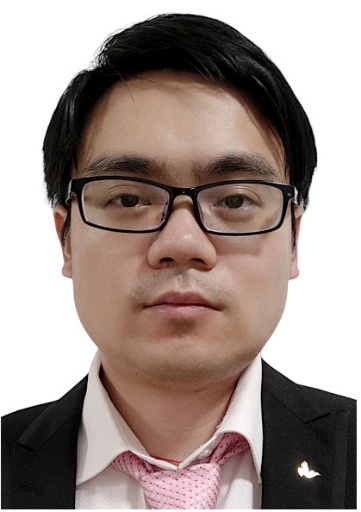
姓名:杨海涛
研究方向:交流电机与并网变换器高性能控制系统
联系方式:yhtao@ncepu.edu.cn
一、个人简介
杨海涛,长期从事交流电机与并网变换器控制理论及应用研究,2021年入选北京市高层次留学回国人才,先后主持国家自然科学基金项目、北京市自然科学基金项目、国家科技重大专项课题以及企业委托项目多项,发表SCI/EI检索论文40余篇,入选全球前2%顶尖科学家终身影响力榜单,获省部级、行业协会科技奖励5项。
二、主要科研项目
[1] 国家重点研发计划课题,升压双绕组电机高性能功率及电流解耦控制技术,498万元,2026-2030,主持
[2] 国家自然科学基金青年项目,52107035,低载波比下永磁同步电机定采样点变步长预测转矩控制,2022-2024,30万元,主持
[3] 北京市自然科学基金-顺义联合基金,L247003,电动汽车电机驱动系统高效高动态控制和调制技术及应用,2024-2027,65万元,子课题负责人
[4] 北京市自然科学青年基金,3214059,低载波比永磁同步电机多模式模型预测开关序列控制,2021-2022,10万元,主持
[5] 企业委托,基于复合振荡抑制技术的高性能WQ伺服电机控制策略研究,2024-2025,29.8万元,主持
[6] 企业委托,无人机载武器强冲击振动下稳定控制方法研究,2025-2026,27万元,主持
三、主要获奖
[1] 2025年 中国电源学会科技科学技术奖二等奖(3/10)
[2] 2023年 中国产学研合作创新成果奖二等奖(7/10)
[3] 2023年 重庆市自然科学奖二等奖(3/5)
[4] 2022年 电工技术学会科技进步奖二等奖(9/10)
[5] 2022年 WILEY出版社杰出开放科学作者奖
[6] 2021年 北京市高层次留学人才
[7] 2019年 电气工程学报年度优秀作者
[8] 2019年 国际电机与系统学术会议最佳论文奖
[9] 2019年 国家留学基金委“优秀自费留学生”
[10]2018年 国际电机与系统学术会议最佳论文奖
[11]2018年 北京市科学技术奖三等奖(3/4)
[12]2017年 悉尼科技大学高质量论文发表奖
[13]2015年 北京市优秀硕士
四、代表性论著
[1]H. Yang, S. Ma, J. Xu, X. Chai and Y. Zhang, "Model Parameter Free-Position Sensorless Predictive Control of SPMSM Drives," IEEE Transactions on Industrial Electronics, vol. 72, no. 12, pp. 12413-12423, Dec. 2025.
[2]H. Yang, J. Xu, S. Ma and Y. Zhang, "Synchronous SVM-Based Model Predictive Flux Control of Induction Motor Drives With Fast Phase Synchronization," IEEE Transactions on Power Electronics, vol. 40, no. 5, pp. 6413-6422, May 2025.
[3]H. Yang, A. Xu, Y. Zhang and X. Chai, "Error Analysis and Design of Sliding-Mode-Observer-Based Sensorless PMSM Drives Under a Low Sampling Ratio," IEEE Transactions on Power Electronics, vol. 39, no. 7, pp. 7783-7792, July 2024.
[4]H. Yang, M. Li, Y. Zhang and A. Xu, "FCS-MPC for Three-Level NPC Inverter-Fed SPMSM Drives Without Information of Motor Parameters and DC Capacitor," IEEE Transactions on Industrial Electronics, vol. 71, no. 4, pp. 3504-3513, April 2024.
[5]H. Yang, Y. Zhang and M. Li, "Duty-Cycle Correction-Based Model Predictive Current Control for PMSM Drives Fed by a Three-Level Inverter With Low Switching Frequency," IEEE Transactions on Power Electronics, vol. 38, no. 6, pp. 6841-6850, June 2023.
[6]H. Yang, Y. Zhang and W. Shen, "Predictive Current Control and Field-Weakening Operation of SPMSM Drives Without Motor Parameters and DC Voltage," IEEE Journal of Emerging and Selected Topics in Power Electronics, vol. 10, no. 5, pp. 5635-5646, Oct. 2022.
[7]H. Yang, Y. Zhang, and J. Liu, “Frequency-adaptive Virtual Flux Estimator-based Predictive Power Control with Suppression of DC Voltage Ripples Under Unbalanced Network,”IEEE Transactions on Industrial Electronics, vol. 67, no. 10, pp. 8969-8979, Oct. 2020.
[8]H. Yang, Y. Zhang, J. Liang, J. Liu, N. Zhang, and P. Walker, “Robust deadbeat predictive power control with a discrete-time disturbance observer for PWM rectifiers under unbalanced grid conditions,” IEEE Transactions on Power Electronics, vol. 34, no. 1, pp. 287–300, January 2019.
[9]H. Yang, Y. Zhang, J. Liang, J. Gao, P. D. Walker, and N. Zhang,“Sliding-mode observer based voltage-sensorless model predictive power control of PWM rectifier under unbalanced grid conditions,” IEEE Transactions on Industrial Electronics, vol. 65, no. 7, pp. 5550–5560, 2018.
[10]H. Yang, Y. Zhang, G. Yuan, P. D. Walker, and N. Zhang, “Hybrid synchronized PWM schemes for closed-loop current control of high power motor drives,” IEEE Transactions on Industrial Electronics, vol. 64, no. 9, pp. 6920–6929, Sept 2017.
[11]Zhang, B. Zhang, H. Yang*, et al, “Generalized Sequential Model Predictive Control of IM Drives With Field-Weakening Ability,” IEEE Transactions on Power Electronics, vol. 34, no. 9, pp. 8944–8955, 2019.
[12]Y. Zhang, Y. Bai, H. Yang*, and B. Zhang, “Low switching frequency model predictive control of three-level inverter-fed IM drives with speed sensorless and field-weakening operation,” IEEE Transactions on Industrial Electronics, vol. 65, no. 10, pp. 7900-7910, 2018.
[13]Y. Zhang, J. Liu, H. Yang*, and J. Gao, “Direct power control of pulse width modulated rectifiers without DC voltage oscillations under unbalanced grid conditions,” IEEE Transactions on Industrial Electronics, vol. 65, no. 10, pp. 7900-7910, 2018.
[14]Y. Zhang, Y. Bai and H. Yang*, "A Universal Multiple-Vector-Based Model Predictive Control of Induction Motor Drives," IEEE Transactions on Power Electronics, vol. 33, no. 8, pp. 6957-6969, Aug. 2018.
[15]Y. Zhang*, Y. Peng* and H. Yang*, "Performance Improvement of Two-Vectors-Based Model Predictive Control of PWM Rectifier," IEEE Transactions on Power Electronics, vol. 31, no. 8, pp. 6016-6030, Aug. 2016.
[16]H. Yang, Y. Zhang, P. D. Walker, N. Zhang, and B. Xia,“A method to start rotating induction motor based on speed sensorless model-predictive control,” IEEE Transactions on Energy Conversion, vol. 32, no. 1, pp. 359–368, March 2017.
[17]Y. Zhang, J. Liu, H. Yang* and F. Shan, “New Insights into Model Predictive Control for Three-Phase Power Converters,” IEEE Transactions on Industry Applications, vol. 55, no. 2, pp. 1973–1982, 2019.
[18]H. Yang, Y. Zhang, P. D. Walker, J. Liang, N. Zhang, and B. Xia, “Speed sensorless model predictive current control with ability to start a free running induction motor,” IET Electric Power Applications, vol. 11, no. 5, pp. 893–901, 2017.
[19]H. Yang, Y. Zhang, J. Liang, B. Xia, P. D. Walker, and N. Zhang, “Deadbeat control based on a multipurpose disturbance observer for permanent magnet synchronous motors,” IET Electric Power Applications, vol. 12, no. 5, pp. 708–716, 2018.